Best feather toy

Go Cat
Go Cat Da Bird Single Pole Feather Teaser Wand
4.8
🪶 Best Feather Toy
Tradeoff: String and feathers are a swallow risk — put it away between sessions.
Litter training is mostly not training: kittens take to a box readily when it is shallow enough to climb into, close to where they spend their time, filled with a fine unscented litter, and kept clean. Socialization is the part with a deadline, and kitten-proofing is mostly about what goes in the mouth.
18 guides on kittens, grouped by what you're trying to work out.
What to have ready, the safe starter room, night one, and settling a nervous kitten.
How much and how often, kitten versus adult food, weaning, and when to switch.
Box choice, litter choice, accidents, and the setup that makes it happen on its own.
Vaccination schedule, deworming, neutering timing, teething, and growth milestones.
Researched picks from the categories this section covers.
Best feather toy
Go Cat
🪶 Best Feather Toy
Tradeoff: String and feathers are a swallow risk — put it away between sessions.
Best overall cat food

Purina Pro Plan
🏆 Best Overall Cat Food
Tradeoff: By-product meal in the ingredient list — nutritionally sound, but it puts some owners off.
Best overall cat toy
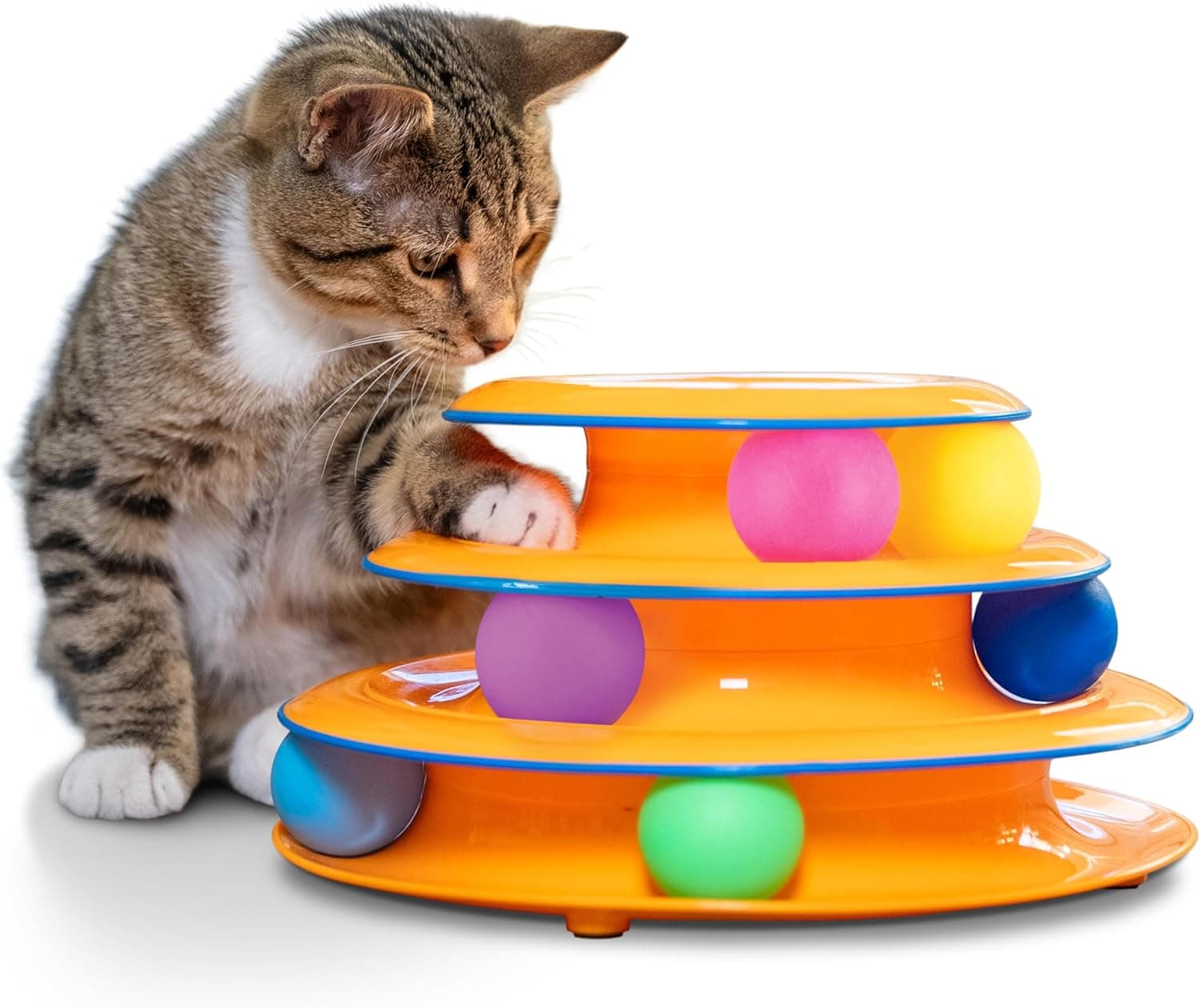
Catstages
🏆 Best Overall Cat Toy
Tradeoff: It clatters on hardwood — expect to hear it at 3 a.m.
Best overall cat litter

Dr. Elsey's
The gold standard: rock-hard clumps, 99.9% dust-free, unscented — the litter cats and reviewers agree on.
Tradeoff: Heavy to carry — no lightweight version.
Best indoor cat food

Hill's Science Diet
🏠 Best Indoor Cat Food
Tradeoff: Premium pricing for a mainstream ingredient list — you're paying for the QA.
Best high-protein cat food

Instinct
💪 Best High-Protein Cat Food
Tradeoff: Rich enough that a fast switch causes digestive upset — transition over 7-10 days.
The first months — setup, socialization, litter training, and kitten-proofing. Litter training is mostly not training: kittens take to a box readily when it is shallow enough to climb into, close to where they spend their time, filled with a fine unscented litter, and kept clean. Accidents at this age are usually a box problem rather than a discipline problem. Socialization is the part with a deadline — early gentle handling, being picked up, having paws and mouth touched, meeting calm people, and getting used to a carrier all pay off across the next fifteen years, and a carrier left out as furniture stops being the thing that only means the vet. Kitten-proofing is mostly about what goes in the mouth: string, ribbon, hair ties, rubber bands, and cords are the classic hazards. Expect to feed kitten food more often than adult meals, and expect nocturnal chaos. Play with a wand toy rather than your hands, or the biting habit outlives the kitten.
Roughly four small meals a day until about four months, three until six months, and twice a day after that, on food formulated for growth. Kittens have small stomachs and high energy needs, so frequency matters more than it does for an adult cat. Free-feeding dry alongside measured wet meals is a common and workable approach at this age.
Mostly by getting the setup right. Use a box shallow enough for a kitten to climb into unaided, keep it in the room where the kitten spends its time, fill it with a fine unscented litter, and scoop it constantly. Place the kitten in it after meals and naps. Nearly all kittens take to it within days; persistent accidents point at the box, not the kitten.
Most kittens start a vaccination course at around six to eight weeks with boosters every few weeks until about sixteen weeks, alongside deworming and a general health check. Your vet sets the exact schedule based on local risk and the kitten's history, so book the first visit soon after bringing it home.
Never use hands as toys, even once — a kitten that learns hands are prey becomes an adult cat that ambushes ankles. Redirect onto a wand toy every single time, end play briefly when teeth find skin, and make sure the kitten is getting enough real interactive play, since most biting is under-stimulation looking for an outlet.
Socialization & handling
The window, handling, carrier training, meeting other pets, and kitten-proofing the house.