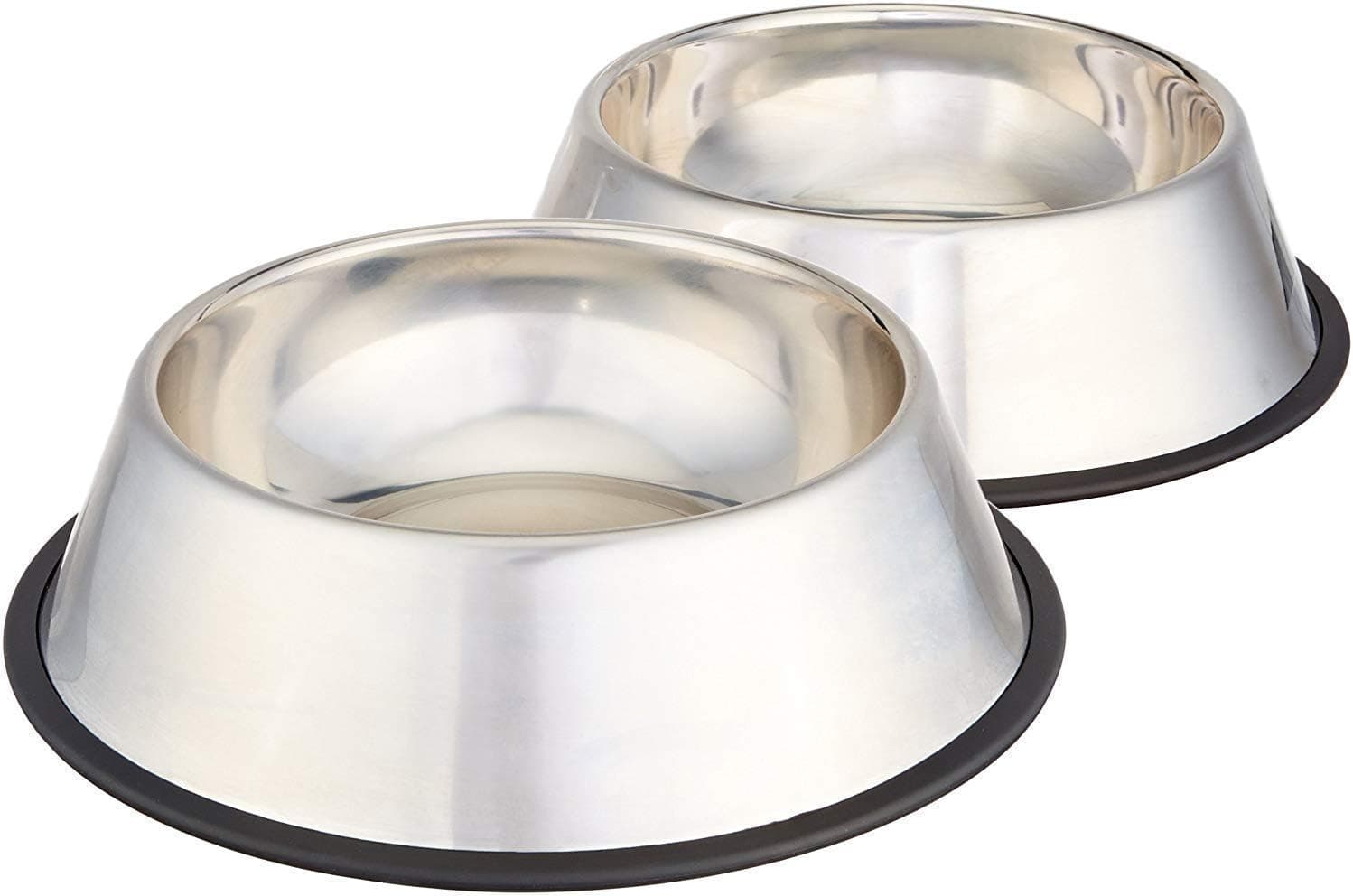
Stainless beats plastic for hygiene; stability and capacity do the rest. Simple category, real differences. Stainless steel is nonporous, dishwasher-safe, and does not accumulate scratches the way plastic does — scratched plastic traps bacteria and is the usual suspect when a dog develops chin irritation. Ceramic is heavy and easy to clean but chips, and a chipped glaze is no longer a food-safe surface. Weight and a grippy base are what stop a bowl being shoved around the kitchen by an enthusiastic eater. Slow-feeder bowls genuinely help a dog that inhales meals, stretching a thirty-second dinner into something longer. Elevated feeders suit some dogs with neck or mobility problems, but they are not a general upgrade, and whether bowl height affects bloat risk is not a settled question — ask your vet rather than the product page. Wash bowls daily. A water bowl left to grow a film is the least glamorous and most common hygiene lapse in the house.
Stainless is the vet-default: dishwasher-safe, chew-proof, and doesn't harbor bacteria like scratched plastic. This non-skid 2-pack costs less than lunch.
Stainless is the vet-default: dishwasher-safe, chew-proof, and doesn't harbor bacteria like scratched plastic. This non-skid 2-pack costs less than lunch.
Stainless steel is the default for a reason: it does not hold odour, it survives a dishwasher indefinitely, and it has no surface for bacteria to colonise once it is scratched. Ceramic is the other safe choice, provided the glaze is lead-free and intact — a chipped ceramic bowl should be retired rather than washed, because the exposed body underneath is porous. Plastic is the one to avoid where you can. It scratches from ordinary use, those scratches trap bacteria that survive washing, and in some dogs the contact causes a low-grade chin irritation often called plastic dish dermatitis. If a plastic bowl is what you have, replace it once the inside stops feeling smooth.
Size and stability matter more than capacity
Buy for the dog's muzzle rather than for the meal. A deep, narrow bowl makes a flat-faced dog work for every mouthful, while a wide shallow one lets a long-nosed dog push food over the rim. Most dogs are best served by a bowl a little wider than their muzzle and deep enough to hold a meal without heaping. Stability is worth paying attention to on hard floors: a lightweight bowl slides away as the dog eats, which turns a two-minute meal into a chase across the kitchen. A rubber base ring or a weighted bowl fixes this for a few pounds, and it is the single upgrade owners notice most.
When a slow feeder or an elevated bowl is worth it
Slow feeders help a genuine gulper — a dog that finishes a bowl in under a minute, or that regularly regurgitates undigested food shortly after eating. They are unnecessary for a dog that already paces itself, and the moulded mazes are harder to clean properly, so do not buy one speculatively. Elevated bowls are a narrower case still. They make eating meaningfully more comfortable for tall dogs, arthritic dogs, and dogs with certain neck or oesophageal conditions. For deep-chested breeds the picture is less reassuring, since some research has associated raised feeding with an increased risk of bloat. If your dog is in that group, this is a question for your vet rather than a purchase to make on a hunch.