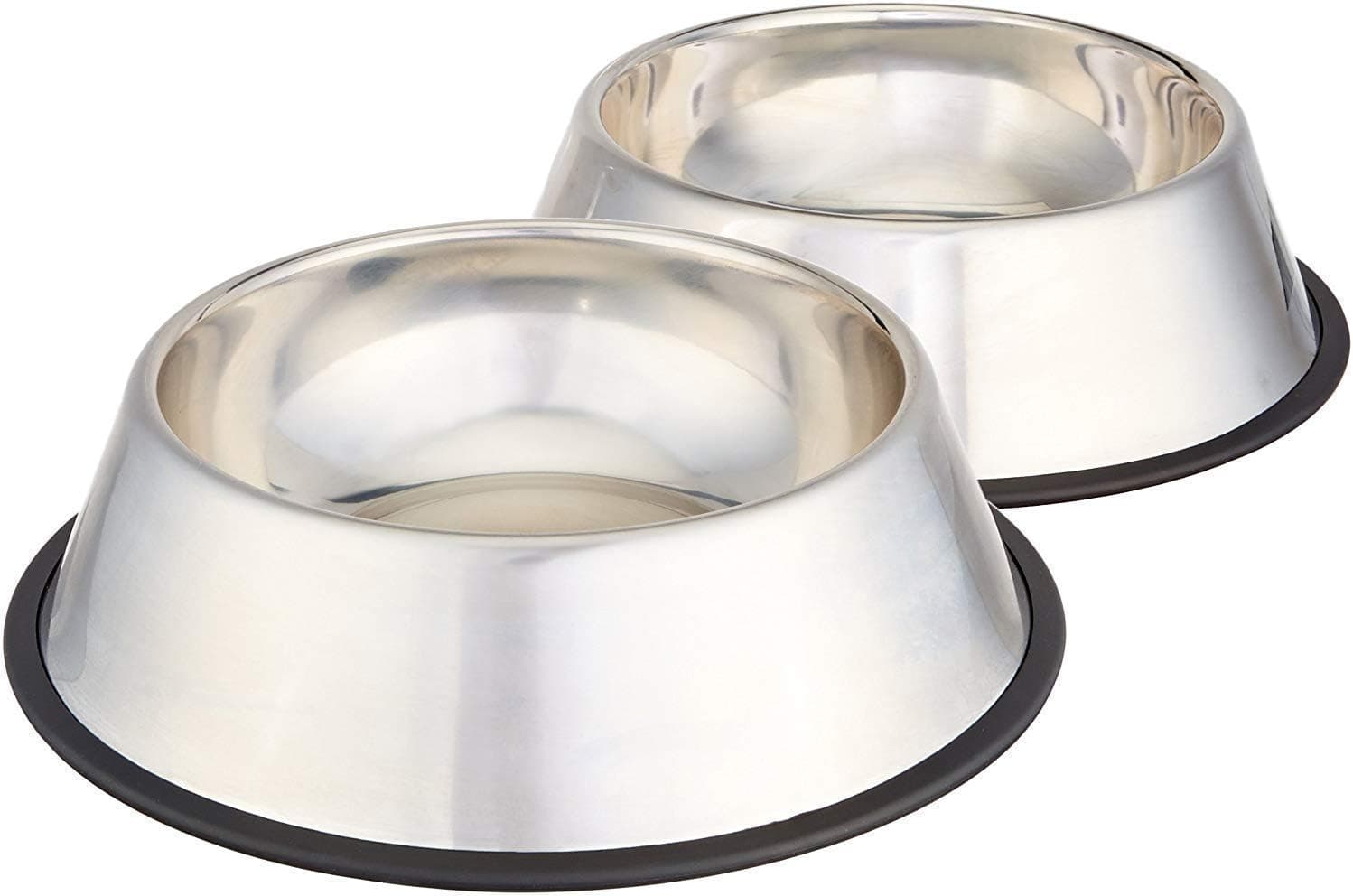
Whisker-friendly shapes, stainless hygiene, and stability against enthusiastic eaters. The shape point is real: a deep, narrow bowl presses on a cat's whiskers at every mouthful, and some cats respond by pulling food out onto the floor or leaving the last of it behind. A wide, shallow dish removes the problem, and that is most of what a cat bowl needs to do. Stainless steel and glazed ceramic clean properly; plastic scratches, holds oils and smells, and is a common suspect behind feline chin acne. Cats often prefer their water away from their food, which is free to arrange. Fountains suit cats that ignore still water, but only if you keep up with filter changes and cleaning — a neglected fountain is worse than a plain bowl. Wash bowls daily and refresh water daily whether it looks dirty or not. And if a cat suddenly starts drinking much more than usual, that is a vet question, not a bowl question.
Stainless is the vet-default: dishwasher-safe, chew-proof, and doesn't harbor bacteria like scratched plastic. This non-skid 2-pack costs less than lunch.
Stainless is the vet-default: dishwasher-safe, chew-proof, and doesn't harbor bacteria like scratched plastic. This non-skid 2-pack costs less than lunch.
A cat's whiskers are dense with nerve endings and sit well outside the width of its face. A bowl narrow enough to press them against the sides as the cat eats is genuinely unpleasant, and the usual symptom is a cat that paws food onto the floor and eats it there, or that leaves the food ringing the edge and eats only from the middle. The fix is not a special product: it is a wider, shallower dish. Any saucer-shaped bowl that lets a cat eat without its whiskers touching the rim will do, and most cats prefer one whether or not they showed a problem with the old bowl.
Material, and why plastic is the wrong default
Stainless steel and glazed ceramic are both easy to keep genuinely clean, and neither holds smells between meals — which matters more for cats than for dogs, because a cat that finds its bowl faintly rancid will simply stop using it. Plastic performs worst on all three counts: it scratches, the scratches hold bacteria and odour, and in some cats sustained contact contributes to chin acne, the scatter of blackheads along the underside of the jaw that owners usually notice while stroking. Switching to steel or ceramic resolves a good proportion of those cases on its own.
Water, fountains and where the bowls go
Cats evolved to take most of their moisture from prey and are not strongly driven to drink, which is why chronic mild dehydration is a real concern in cats fed dry food. Two things help. The first is free: put water bowls somewhere other than beside the food. Many cats will not drink next to a feeding station, and moving the water a room away is often enough to increase intake noticeably. The second is a fountain, which suits the substantial minority of cats that prefer moving water — but only if you commit to cleaning it, since a neglected pump grows a biofilm that is worse than the still bowl it replaced. Whatever you choose, wash bowls daily rather than topping them up.